ADA Portable Bathroom Demands and Availability Recognition Explained
Portable restrooms have a tendency to be treated as a final line thing, right up till somebody gets here on website and can not make use of the centers. That is generally when the genuine cost of bad preparation appears, not simply in irritation, however in exemption. If you handle occasions, public projects, church functions, parks, institution tasks, emergency situation feedback websites, or any type of area where an ada portable bathroom is part of the strategy, ease of access can not be an afterthought.
I have actually seen this problem misinterpreted in two various means. Often individuals think that leasing one larger system automatically resolves every little thing. Various other times they concentrate on the system itself and forget the course to it, the ground around it, the signs, or the method the door really functions once it is provided and put. The ADA does not deal with availability as a sticker label on the side of a bathroom. It treats it as useful access.
That distinction matters. A restroom can be marketed as an ada available portable washroom or an ada compliant portable toilet, yet still fall short in technique if it is placed on an unattainable surface, blocked by group obstacles, or set in a collection without appropriate available identification. The purpose of this post is to make the federal needs less complicated to comprehend without flattening them into simplistic sales language.
The guideline that regulates mobile washroom accessibility
For mobile commode services in the USA, the regulating government accessibility requirement is the 2010 ADA Standards for Accessible Style, as analyzed by the U.S. Access Board and the Department of Justice. That is the baseline structure people ought to be making use of when they talk about ada mobile commode requirements.
This is where some confusion starts. Vendors, organizers, and site supervisors usually make use of terms like ada compliant portable toilets, ada-compliant mobile washrooms, or ada handicap obtainable portable restroom mutually. In common discussion, that is understandable. In practice, though, the label matters less than whether the installment in fact lines up with the ADA standards.
The federal requirement does not quit at the idea that an easily accessible mobile unit need to exist somewhere on the residential property. It addresses the amount of easily accessible units are needed in a cluster, how those systems are recognized, and whether a person can approach, go into, and use them. That indicates compliance is both about quantity and usability.
If you are preparing an ada mobile toilet rental for the public or for program individuals, the safer way of thinking is easy: do not ask just, "Did we rent an accessible system?" Ask, "Can an individual that requires it discover it, reach it, enter it, and utilize it with self-respect?"
How several available units are required in a portable commode cluster
One of the clearest guidelines in this location is the 5 percent requirement. For clusters of portable single-user bathroom devices, at the very least 5 percent of the units in each cluster must be accessible. The Gain access to Board has explained that this uses also at short-lived events.
That factor is simple to miss due to the fact that momentary websites commonly get treated as if they operate under looser assumptions. They do not. A weekend break festival, a seasonal reasonable, a neighborhood fundraising event, or a momentary area workplace may be short in period, yet the ease of access responsibility does not disappear because the arrangement is temporary.
The word "cluster" is also crucial. It is not enough to look across a whole big building and say there is one accessible device somewhere. The requirement puts on each cluster of mobile single-user units. If your site has multiple washroom groups spread throughout a venue, each organizing must be evaluated on its own.
This is where experienced planning helps. A website can appear compliant on paper and still create barriers in reality if the obtainable systems are concentrated too much where individuals are actually gathering. The federal guideline in the verified context talks to the cluster need. Good judgment goes one step additionally and asks whether the positioning supports practical access for the people anticipated to utilize the site.
Temporary occasions are not a complimentary pass
This is just one of one of the most common misunderstandings I hear. People assume access requirements kick back when the washrooms get on trailers, delivered for a weekend, or placed for a single public event. The Accessibility Board's analysis states otherwise. The 5 percent accessible-unit regulation uses even at temporary events.
That issues for coordinators that are managing licenses, crowd flow, hygiene, waste solution, and a lengthy checklist of supplier deadlines. It is simple to treat the washroom order as a commodity purchase. Once members of the public are entailed, especially in a short-term occasion setup, availability should be assessed early, not at the end.
I have actually seen the practical difference this makes in public-facing procedures. When ease of access is thought about early, the positioning usually functions better for everybody. Courses are clearer. Queues are less disorderly. Staff are not rushing to relocate fence or plywood after issues been available in. The occasion feels more inviting because it is extra usable.
By contrast, when someone orders a financial institution of typical systems and attempts to resolve availability on distribution day, the repairs are frequently uncomfortable or incomplete. An ada certified mobile washroom can just do its job if the bordering setup values the same standard of access.
Identification is called for, not optional
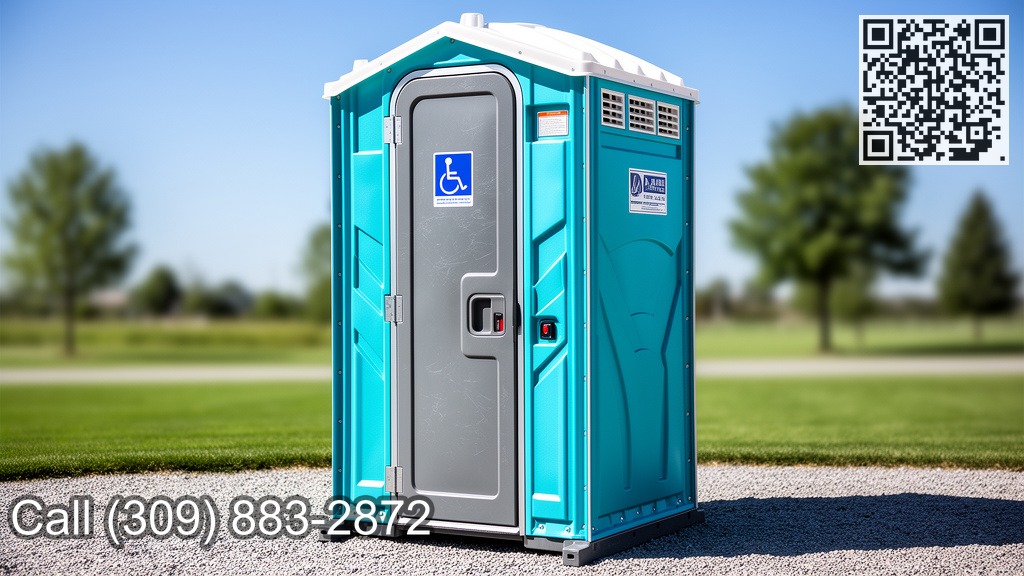
Accessible mobile toilet systems should be related to the International Icon of Accessibility. That requirement is direct, and it offers a practical objective. A person trying to find the available device needs to not need to evaluate each washroom one by one or ask staff for help.
This appears simple, yet it gets overlooked surprisingly typically. At hectic websites, especially when systems are presented rapidly, tags might be obscured, missing, or positioned where they are hard to spot. Occasionally the system is technically the available one, but absolutely nothing in the line of bathrooms makes that clear from a distance. That produces confusion and can compel unnecessary interactions that many people would rather avoid.
Identification does more than please an official guideline. It supports self-reliance. Good availability design decreases the amount of extra initiative an individual has to invest just to do what everyone else is doing.
If you are assessing ada certified easily accessible mobile bathrooms, this is among the most convenient details to examine aesthetically. Is the device https://waylongysy363.slatecurrent.com/posts/ada-certified-portable-toilets-for-occasions-a-clear-overview-to-ease-of-access-rules clearly marked with the International Symbol of Accessibility? If the response is no, the installment is missing a required piece.
The route to the system matters as much as the system itself
A great deal of conformity issues have nothing to do with the toilet inside. They start outdoors. Portable easily accessible devices should have an accessible course and entrance, and any type of required ramps or landings have to comply with ADA technical requirements.
This is where availability commonly breaks down in the field. The system obtains delivered appropriately, but it is positioned on soft ground after rainfall, beside a high strategy, beyond a curb without certified transition, or behind temporary obstacles that tighten the course. On paper, the website has an ada portable bathroom. In use, it does not.
The path is not a side issue. If someone can not reach the device without going across unstable ground or working out an unattainable technique, the obtainable feature inside the washroom comes to be unimportant. Availability begins prior to the door.
For temporary websites, this suggests looking carefully at where the washroom cluster is being positioned. A tough, steady setup area and a functional path of travel are not high-ends. They belong to what makes an ada-compliant portable toilet actually obtainable in practice.
The entryway matters too. If a ramp or touchdown is required, those elements have to meet ADA technical demands. The validated context does not offer precise dimensions, so I will not create them right here. The important factor is that accessibility is not satisfied by improvisating a makeshift board, a high system, or a muddy patch that staff think is "sufficient for someday." If a ramp or landing is required, it has to comply.
Inside the device, technological demands still apply
Portable systems are portable, however they are still toilet rooms for ADA objectives. The devices should meet toilet-room technical demands, consisting of fixture clearances, turning room, and door handling clearances, together with suitable grab-bar and water-closet clearance rules.
This is why a larger footprint alone is insufficient. Individuals often presume that if a portable washroom looks roomier than a conventional unit, it needs to be compliant. That is not a safe assumption. Extra indoor space is not the very same thing as the needed clearances and maneuvering conditions.
Door maneuvering can be especially exposing. A device could be marketed as accessible, yet if the method the door features or the bordering placement hinders functional use, the benefit of the bigger enclosure is lowered. The exact same chooses turning space and the positioning of interior features. Access relies on how the whole space works together.
This is one reason that experienced customers do not depend just on product tags. They verify that the unit being offered is intended to satisfy ADA-accessible use and afterwards make certain the provided setup does not threaten that design. For anyone keywords like ada certified mobile commode or ada compliant mobile bathrooms, that is the real problem. Compliance has to do with problems of use, not simply a category name in a rental catalog.
The exemption individuals misinterpreted on construction sites
Construction settings develop a regular location of confusion. The ADA Criteria differentiate portable commode units at building websites utilized solely by construction employees, and the mentioned 1991 standard includes an exemption from the portable-toilet access scoping requirement for those devices. That is a slim point, and it should not be stretched past what it says.
The crucial phrase is made use of solely by construction employees. Individuals often hear there is a construction-related exemption and after that presume mobile commodes at any type of active jobsite do not need to be obtainable. That is too broad. The validated context supports just the minimal difference explained above.
For general portable toilet services, the accessible-unit requirement stays. So if the website problems or public use relocation outside that narrow construction-personnel-only context, it is risky to lean on the exemption casually. This is among those locations where overconfidence causes preventable mistakes.
In functional terms, if a site is public-facing, mixed-use, or serving attendees past construction crews, it is wise to assess it under the basic access need as opposed to thinking a covering exemption exists. The verified truths sustain a slim exception, not a basic retreat hatch.
What to validate before distribution day
A brief testimonial before the truck gets here can protect against most ease of access failings. You do not require a significant procedure, however you do need to look beyond the rental order itself.
- Confirm that each cluster of mobile single-user toilets consists of at the very least 5 percent accessible units.
- Verify that the obtainable device will be identified with the International Icon of Accessibility.
- Check that the placement permits an easily accessible route and accessible entrance.
- If ramps or touchdowns are needed, ensure they are planned to follow ADA technical requirements.
- Ask whether the unit provided is designed to satisfy appropriate toilet-room technical needs such as transforming space, fixture clearances, door maneuvering clearances, and grab-bar and water-closet rules.
That checklist is easy on purpose. Most real-world failings occur due to the fact that one of those basics is missed, not because the regulation itself is impossible to understand.
Why the availability icon is worthy of more attention
The recognition need can sound small compared to path accessibility or indoor clearances, yet it deserves its very own focus since it influences use in crowded, time-sensitive environments. At a stuffed fairground, roadside emergency configuration, or large exterior wedding event, people are not reading rental requirements. They are scanning the washroom row and making quick decisions.
Clear identification with the International Symbol of Availability lowers stress and guesswork. It additionally aids event staff direct guests without turning ease of access into a public discussion. For many customers, that matters. People must not need to clarify their needs simply to find a restroom.
There is one more sensible benefit. Noticeable identification aids protect the obtainable unit from ending up being simply another general-use stall in the eyes of the crowd. It does not remove abuse, however it improves clarity. At high-traffic occasions, quality is valuable.
If your supplier advertises ada certified easily accessible portable toilets, this is just one of the most noticeable indicators that the setup has actually been thought through. It is not the only sign, but it is an essential one.
Common planning blunders that produce noncompliance
The errors I see most often are not significant. They are average oversights made under time pressure. A device gets here with the right label, but the collection count is incorrect. The count is right, however the accessible unit is put at the much side of rough ground. The route serves in dry weather condition, after that becomes challenging after a storm. The icon exists when filled, then concealed after website fencing is installed.
A 2nd pattern is the presumption that the rental business alone lugs the whole conformity burden. Actually, placement and website problems are typically regulated by the client, coordinator, contractor, or residential or commercial property manager. A supplier may provide an ada accessible mobile washroom, however if the obtaining party places it in a location without an accessible course, the result still fails the user.
This is why obligation needs to be discussed plainly prior to setup. That is choosing the specific area? Who is inspecting the route? That is making sure the indicator remains visible? Those are operational concerns, yet they are straight linked to accessibility.
Accessibility belongs to a more comprehensive compliance culture
A helpful means to think of this subject is that toilet availability rests inside a much bigger ADA conformity environment. In 2026, the Department of Justice released advice prolonging the deadline for sure state and local government web and mobile access regulations to April 26, 2027 for larger entities. That specific assistance has to do with digital access, not portable bathrooms. Still, it reflects a bigger fact: ADA compliance is active throughout fields, and companies are being asked to pay attention in even more places, not fewer.
That broader context issues because it transforms exactly how accessibility should be approached internally. Groups that still deal with ADA issues as occasional technicalities are falling behind. Whether the subject is a website, a mobile service, a facility entry, or an ada mobile toilet, the pattern is the same. Accessibility expectations are genuine, recurring, and interconnected.
From a management point ofview, this is in fact practical. It implies toilet access need to not be separated as a specialty issue that only appears throughout significant public occasions. It belongs inside typical preparation, purchase, operations, and risk review.
How to talk with suppliers without obtaining lost in marketing terms
Portable bathroom vendors frequently utilize a mix of phrases: ada compliant portable washroom, ada-compliant portable toilet, ada certified mobile bathrooms, or similar phrasing. Those tags can be beneficial beginning factors, but they need to result in details questions.
Ask what obtainable systems are being provided for every cluster. Ask just how the device is identified. Ask whether the unit is intended to meet the appropriate technological needs for accessible commode areas. After that match those response to your real site problems, because the provided setting matters just as long as the item itself.
These are the discussions that usually create better end results:
- How lots of overall single-user units will remain in each collection, and the amount of of those will be accessible?
- How will the easily accessible device be determined on site?
- What does the supplier need from you to protect an obtainable route and entrance?
- Will ramps or touchdowns be required based upon your placement plan?
- Who will certainly verify the final configuration after delivery?
You can have those conversations in ten mins, and they commonly avoid the problems that would certainly or else consume hours later.
The objective is dignity, not simply technical compliance
The language about ADA requirements can really feel dry, but the lived effect is not. A restroom is fundamental facilities. When it is hard to reach, the message obtained by the customer is immediate and individual. You can be right here, but not completely. You can participate in, but just with additional initiative. You can participate, but only if somebody else assists you browse something everybody else can do alone.
That is why this topic should have treatment. An ada mobile bathroom is not simply a larger box delivered to a site. It is part of whether an area is really usable. The 2010 ADA Standards, the 5 percent collection demand, the need for available recognition, the available path and entryway, and the technical rules for the bathroom room itself all work together towards one useful result: a person who requires the obtainable system can in fact make use of it.
When planners understand that, the decisions improve. The rental order enhances. The positioning enhances. The site experience enhances. And what can have been a preventable obstacle ends up being something extra fundamental and more gentle, which is exactly what obtainable style is meant to accomplish.
 Ask ChatGPT
 Ask Grok
 Ask Perplexity
 Ask Claude
 Ask Google AI
 Ask You